Stamped concrete services in Seymour IN - the look of stone or brick on your patio
Cracked, sinking or just plain gray patio? We replace it with concrete stamped to look like slate, brick or natural stone.
- Fully licensed and insured.
- Free quotes on site.
- We reply within 1 business day.
What goes into a stamped concrete patio, walk or driveway?
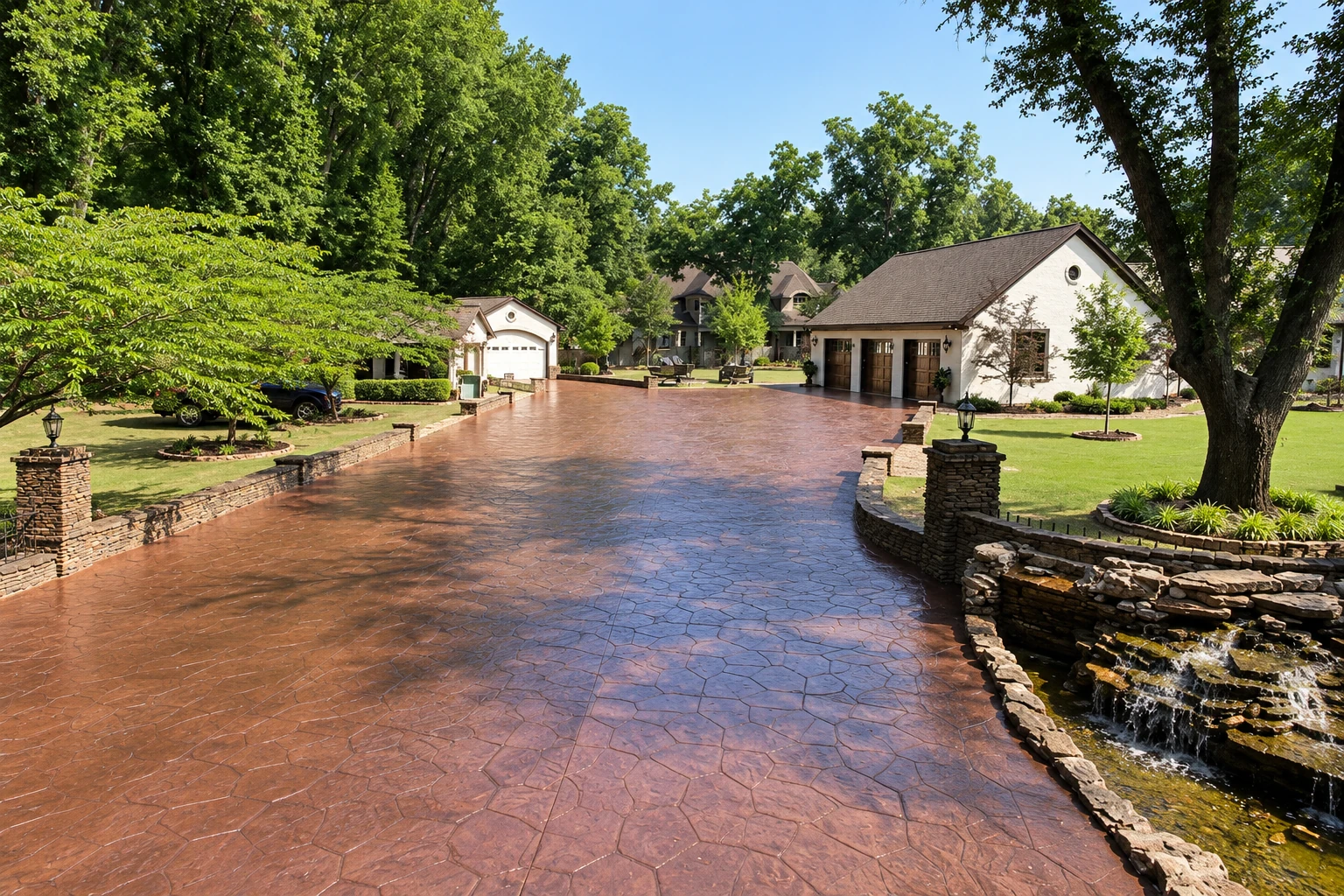
Stamped concrete is new flatwork, the slabs you walk and drive on, that we color and press with a pattern while it's still wet so it looks like slate, brick or natural stone. Our stamped concrete services in Seymour, IN usually include tearing out the old slab, building a new base under it and sealing the finished surface, and most of the waiting comes after the pour, while the concrete cures.
Most people call us with a patio or walk that's cracked, sunk or just worn out, and they want something better looking than another plain gray slab. Your price turns mostly on the size, how much old concrete has to come out, how much digging and packing the base needs, the pattern and number of colors, and the sealer you pick. The schedule turns on the weather and on curing, the wait while the concrete gains strength before you use it, so you'll be walking on a patio well before you can park on a stamped driveway. I'll walk the spot with you and put your own figure in a written estimate that lists what's included.
What tells you it's time to replace that patio or walk?
Cracks that keep spreading
One crack is normal, but a web of them, or pieces that rock when you step on them, usually means the ground under the slab has moved. Patching only covers it up, and every winter of water getting into those cracks makes the tear-out bigger.
Sinking or uneven sections
A corner that's dropped or a lip you catch your toe on usually means the base was raked level instead of dug out and packed, so the dirt settled and took the slab with it. Waiting lets it drop further, and the trip edge gets worse each season.
Water pooling by the house
Puddles that sit on the slab or run toward your foundation usually mean nobody checked which way the water should go when it was poured. Left alone, that water ends up against your house, so we fix the slope when we replace the slab.
Work that often goes with it
Concrete sidewalk building
A new stamped patio looks odd with a cracked walk leading up to it, so many people redo the path from the driveway or back door at the same time.
Garage floor concrete
If your garage slab is pitted, cracked or holding water, replacing it while our crew is already set up at your house saves a second round of trucks and mess.
How we do stamped concrete, from the dirt up
Stamping takes a different set of skills than plain flatwork, but it starts the same way. We break out the old slab, check where the water will run so the new one falls away from your house, and dig out and pack the subgrade, the ground the slab sits on, because no pattern can hide a slab that settles. Then we set the forms and steel, pour early in the day so midday heat doesn't leave a weak, dusty top, color it and press the pattern in while it's still workable. We cut control joints, shallow grooves that give the slab a planned line to crack along, and seal it once it has cured. If the budget gets tight, I'd rather you pick a simpler pattern than cut corners on the base, because the base is the part nobody sees on day one and everybody sees a few winters later. Before we seal, we'll help you weigh a sealer that deepens the color against one that mostly protects, and I'll show you how to tell when it's time to reseal so you don't build up layers you don't need.
A new stamped patio can make the rest of the yard look tired, so we often pour connected work on the same job. That's usually concrete sidewalk building for the path up to the patio, plain or stamped to match, or garage floor concrete when the garage slab is in rough shape too.
Sealer that deepens the color
Film-forming sealers are the most common choice on stamped concrete because they make the colors richer and give the pattern a finished, slightly wet look. They suit a patio or front walk where the look matters most.
Sealer that mostly protects
Penetrating water-repellent sealers guard against water and stains, but most of them leave the color about as it is. They suit people who want a quieter, natural look and care more about keeping the slab clean.
Get a written estimate for your stamped concrete
We reply within one business day to set a time for me to come look. The estimate at your property is free, with no obligation, and calling (812) 271-8146 works too.
Call (812) 271-8146Why Seymour homeowners call Seymour Concrete for stamped work
Decorative skill, not just pours
Placing and finishing stamped concrete takes skills, products and timing that most concrete work never calls for, so ask any contractor about their decorative jobs, not just their driveways. Our crew of experienced finishers does the stamping, and they know how long a slab gives them before the pattern has to be in.
Fully licensed and insured, every job
Seymour Concrete is fully licensed and insured. Ask any contractor you're considering for proof of both before they start, because that's what protects you if something goes wrong on your property.
I look at every job myself
I come out myself to walk your yard and write the estimate, and I'm on site with the crew when we pour. That way the pattern, the color and the details we agreed on don't get lost between an office and a crew.
Pouring around Seymour since 2017
We've worked out of Seymour since 2017 and pour across the cities around it, including Columbus, North Vernon, Scottsburg and Salem. Industry guidance urges care with outdoor concrete in late fall, winter and early spring, when a freeze could reach it while it's still wet, so we plan late-season stamping around the forecast.
On stamped work, most of what you'll care about a few winters from now is hidden under the pattern, so ask me about the base as much as the color. Call (812) 271-8146 or send us your project details to get started.
What happens after you call about stamped concrete?
Tell me about the job
I ask a few questions about the area, the old slab and the look you're after, then set a time to come see it with you. If old concrete has to come out, mention it so I can look at what's under it.
Walk the site together
I check the slope, the old base and where the water runs, and we talk through patterns, colors and sealers. You get a written estimate that spells out what's included, base work too, so you know what you're paying for before we start.
Form, pour and stamp
Once you say go, we set the date around the weather and I'm on site with the crew from forming to finishing. You stay off the new slab while it cures, and we tell you when it's ready for feet and when it's ready for a car.
Walk the finished job
We walk the finished slab together before we leave, so you can point out anything that doesn't look right while we're still there. Your satisfaction, guaranteed.
Common questions
How much does stamped concrete cost in Seymour, IN?
Across the US, installing a stamped concrete patio usually runs about $24 to $29 per square foot, so treat that as a starting point and not our price. Your own figure moves with the size, the base work, the pattern and the sealer. I'll walk your site and send a written estimate that lists what's included.
Do I need a permit for a stamped concrete patio in Seymour?
Seymour's permit list doesn't name stamped patios or walks, but the city's permit rule covers work on any building or structure, so it's worth checking before a pour. The list names things like pools, spas and fences, permits go through the Building Commissioner, and fees are paid to the Clerk-Treasurer. We check with the office for your property before we schedule and tell you plainly who will handle the paperwork.
How often does stamped concrete need resealing?
Reseal when the slab tells you to, not on a calendar, which means when water stops beading up, stains start soaking in or the color looks faded. Sealing more often than that builds up layers on the surface that can take a lot of time and money to strip off.
What causes cracks in stamped concrete, and will mine crack?
Concrete shrinks and moves with the ground, so a crack can still show up, and the steel or wire mesh inside the slab keeps random cracks from opening wide so they're harder to notice, but it doesn't stop them from forming. That's why the packed base and the control joints matter. Joints can sometimes hide in the grout lines of a brick or block pattern but show more in a random stone look, so ask where they'll fall in the pattern you like.
How do I keep stamped concrete from being slippery when it's wet?
Ask for a slip-resistant grit mixed into the sealer. One sealer maker notes its stamped concrete sealer can get slippery when wet, especially on smoother surfaces, and granules stirred into the wet sealer give the surface the grip the space needs. It's worth thinking about near steps, a pool or a back door.
What is the best way to care for new stamped concrete in its first winter?
Skip deicing chemicals on new outdoor concrete during its first winter, and use them in moderate amounts after that. That's the industry's guidance for fresh exterior concrete, and it applies to a stamped patio, walk or driveway just the same.
Get a price on your stamped concrete
Have the area's rough size, the pattern and color you like and a few photos of the spot ready when you call (812) 271-8146 or fill out the form, and we can get right to the details.