
Concrete floor installation in Seymour IN - a slab that's dry before flooring goes down
Cracked, dusty or damp slab, or a new room waiting on its floor? We pour a level, well-cured slab built for what goes on top.
- Fully licensed and insured.
- Free quotes on site.
- We reply within 1 business day.
How is a concrete floor installed, and what comes with it?
Concrete floor installation in Seymour, IN means digging out and packing the base, laying a moisture barrier under indoor rooms, then pouring, finishing, jointing and curing a new slab you can live and work on for years. It often comes with an addition, a basement, a shop or the removal of an old slab, and the pour itself is usually a short piece of a schedule that also has to allow for curing and, if flooring goes on top, a drying wait.
Most people who call about a floor are building something: an addition, a finished basement, a shop, or a room where an old cracked slab has to come out first. What moves the price is the size of the room, how much old concrete or dirt has to go, how much base work it needs, how thick the slab is and what finish you want on top. The schedule turns on getting the truck close, the weather on pour day, and whether tile, wood or vinyl is going over it, because a covered floor has to dry well past the day you can walk on it. Your written estimate spells out what's included for your room, so you're not guessing.
How do you know your concrete floor needs replacing?
Cracks that keep opening
A crack that keeps getting wider, or one side sitting lower than the other, usually means the dirt under the slab settled because it was never packed. Patching won't hold for long, and the longer it goes, the more the floor tips and the harder it is on whatever sits on it.
Dust and a worn top
If your shoes pick up gray powder or the surface is wearing through in walking paths, the top layer was usually weak from the start. It only gets worse with traffic, and most flooring won't stay stuck to a crumbling surface.
Damp spots, loose flooring
Dark patches, a musty smell or tile and vinyl coming loose usually point to moisture coming up through a slab with nothing under it to slow it down. Left alone, it keeps ruining flooring and glue, no matter how often you replace them.
Often built alongside a new floor
Concrete pool decks
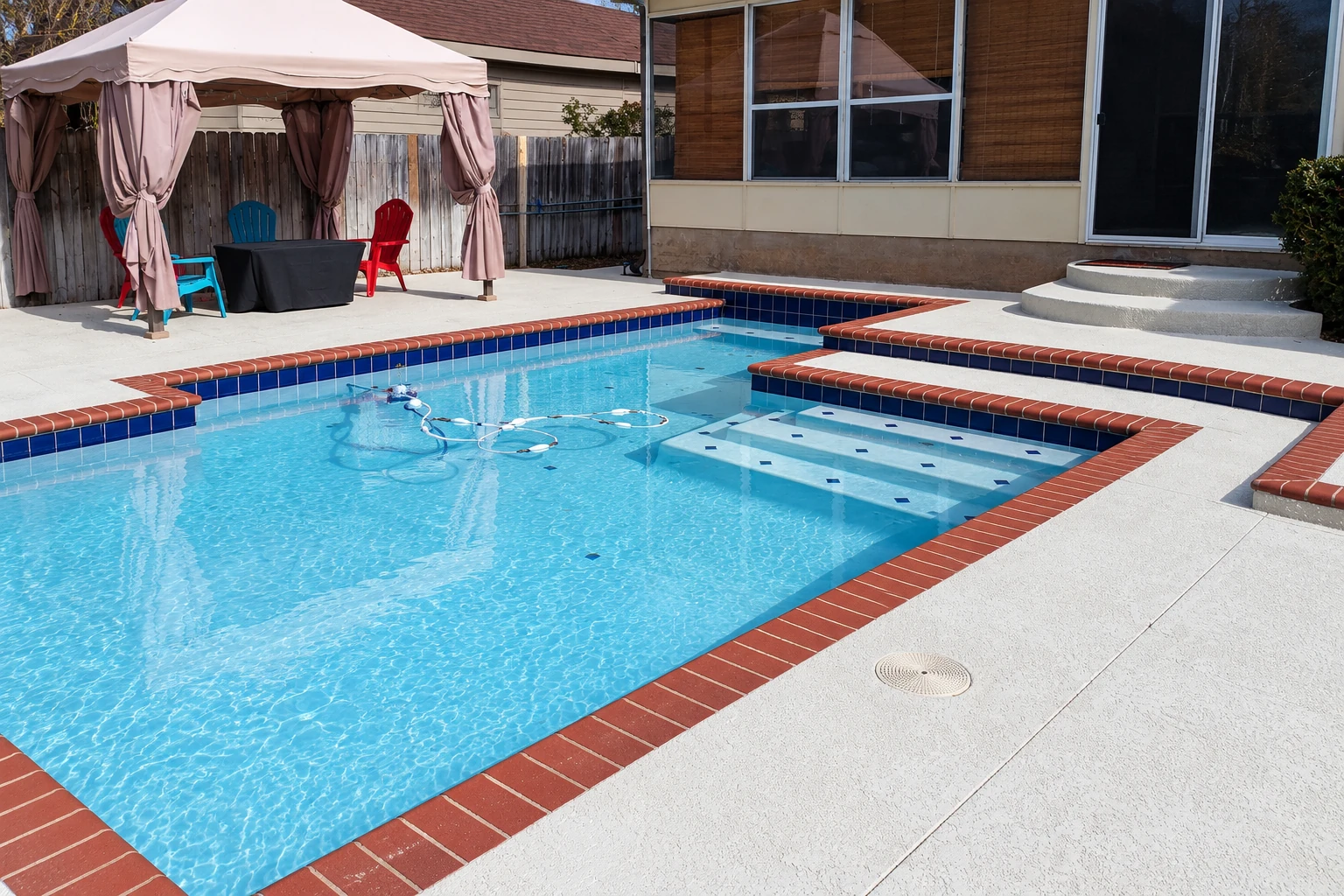
A floor for a pool house or sunroom often opens onto the pool, and a deck poured to drain away from that doorway keeps water off the floor.
Concrete steps construction
Raising or lowering a floor changes the height at the door, so the steps outside may need rebuilding to keep every rise even and safe to walk.
How we handle concrete floor installation
I start at the bottom, because that's where a floor lasts or fails. We dig out to firm ground and pack the subgrade, the dirt and gravel the slab rests on, so it doesn't settle later, then lay a vapor retarder, a plastic sheet that slows moisture coming up from the ground, under every indoor slab. Where the job calls for it, we set rebar, steel inside the slab that holds cracks tight if they come. We pour early in the day when we can, finish the top while the timing's right, cut control joints, shallow grooves that give the slab a straight place to crack instead of across the middle of the room, and keep it covered so it cures slowly and hardens all the way through. If flooring is going over it, I talk through drying time with you up front, so you don't book the flooring crew too early. And if the budget gets tight, I'd rather trim the finish than the base, because nobody sees the base on day one and everybody sees it a few winters later when it sinks.
A floor job often reaches past the room itself. When the new floor sits higher or lower than the old one, the entry may need new concrete steps built to match, and a pool house or sunroom floor often goes in with a concrete pool deck right outside the door, so it's worth planning both at once.
Slab for tile, wood or vinyl
This suits additions and finished basements, where we trowel the top smooth and flat for the flooring crew. It's the option where the drying wait matters most, so we plan your schedule around it before we pour.
Concrete as the finished floor
This suits shops, garages and utility rooms, where a bare or sealed slab is the floor and there's no flooring to wait on. It also keeps your choices open if a slab runs damp, since a coating that breathes or a decorative finish can still go on it.
Get a written estimate for your new floor
We reply within one business day to set a time for me to walk the room with you, and the estimate is free with no obligation. Rather talk now? Call (812) 271-8146.
Call (812) 271-8146Why Seymour homeowners call Seymour Concrete for a new floor
I write every estimate myself
I walk the job with you and write the estimate, then I'm on site with our finishers on pour day. The person who wrote down what's included is standing there while it goes in.
Concrete crews since high school
I worked concrete crews every summer in high school and opened this business in 2017, so we've been at it nine years. We're best known for careful flatwork, the flat pours like driveways, patios, walks and slabs, and an indoor floor is flatwork with closer attention to moisture and timing.
Fully licensed and insured, just ask
Seymour Concrete is fully licensed and insured. That's worth asking any contractor about before they start work inside your house, and I'm glad to answer it.
Local crew, radon talk up front
The Indiana Department of Health estimates that 1 in 3 Indiana homes have radon at levels that pose a serious health risk. We're based in Seymour and pour floors in Columbus, North Vernon, Scottsburg and Salem too, and I'd rather you ask how a new slab gets sealed before we pour than wonder about it afterward.
On a floor, what matters most is the part you won't see once it's poured, so ask me about the base and the moisture plan before anything else. Send us your project details or call (812) 271-8146.
What happens after you call about a new floor?
Call and tell me about it
When you call or send the form, I ask a few questions about the room and the flooring you have in mind. Then we set a time for me to come look at it with you.
Walk the job and price it
I walk the site with you, talk through your options and send a written estimate that says what's included, from the base work and vapor retarder to the finish, so you can see what each part of the price pays for. If flooring is going on top, we talk through the drying wait then too, before you book anyone.
Pour, finish and walk through
Once you say go, I'm on site with the crew from setting the forms to the final finish. Before we leave, we walk the finished floor together so you can ask about anything you see.
Common questions
Is some cracking normal in a new concrete floor?
Yes, even a well designed and well built floor shows some fine cracking and a little curling, which is a slight lift at the slab edges. The concrete industry's own floor guide says as much, and I tell every customer before we pour so nobody's caught off guard. A crack that keeps widening or drops on one side is a different matter and worth having someone look at.
How long before I can put flooring on new concrete?
Usually weeks to months, because a new slab has to dry enough to meet the flooring maker's limits, even in a closed-in, conditioned room. The slab first cures under plastic or waterproof paper for 3 to 7 days, which helps it harden but adds to the drying time. The slab's moisture gets tested before anything goes down, and if it reads high, the fix is a moisture control product the flooring maker approves.
Do I need a vapor retarder under an indoor concrete slab?
Yes, ready-mix industry guidance calls for a vapor retarder directly under and touching every interior floor slab. Without one, moisture from the ground keeps working up into the concrete and into whatever flooring sits on top. Whoever you hire, check that it's written into the estimate.
Can a new concrete floor help keep radon out of my Indiana home?
A new floor is the best time to plan for radon, because the state health department recommends radon-resistant methods for new construction, such as sealing the places radon gets in and passive radon systems that run without fans. Before the pour, ask your contractor how the slab will be sealed.
How much does a new concrete floor cost in Seymour, IN?
The price comes down to the room's size, how much old concrete or dirt has to come out, how much base work it needs, the slab thickness and the finish, so the real number is the one in a written estimate after I've seen the room. Tight access for the truck and a fancier finish raise it, and a simple sealed or bare floor keeps it lower. The estimate visit is free.
What causes a new concrete floor to crack or get dusty?
Bad timing is the most common cause, because finishing, cutting joints and curing each have a right moment, and missing it can leave a floor cracked, dusty, flaking, full of high and low spots or holding water where it shouldn't. Pouring in midday heat is another, since the top dries too fast and can turn weak and powdery later. Both are fair things to ask any crew about before they pour.
Plan your new concrete floor with us
Have the room size, the flooring you're planning and your move-in date handy when you call or send the form, and we can work out how the drying wait fits your schedule on the first visit.