Decorative concrete in Seymour IN - a colored surface that keeps its look
Plain gray slab, or color that's faded and flaking? We help you pick the right color method and sealer, then pour it with care.
- Fully licensed and insured.
- Free quotes on site.
- We reply within 1 business day.
What goes into a decorative concrete patio, walk or driveway?
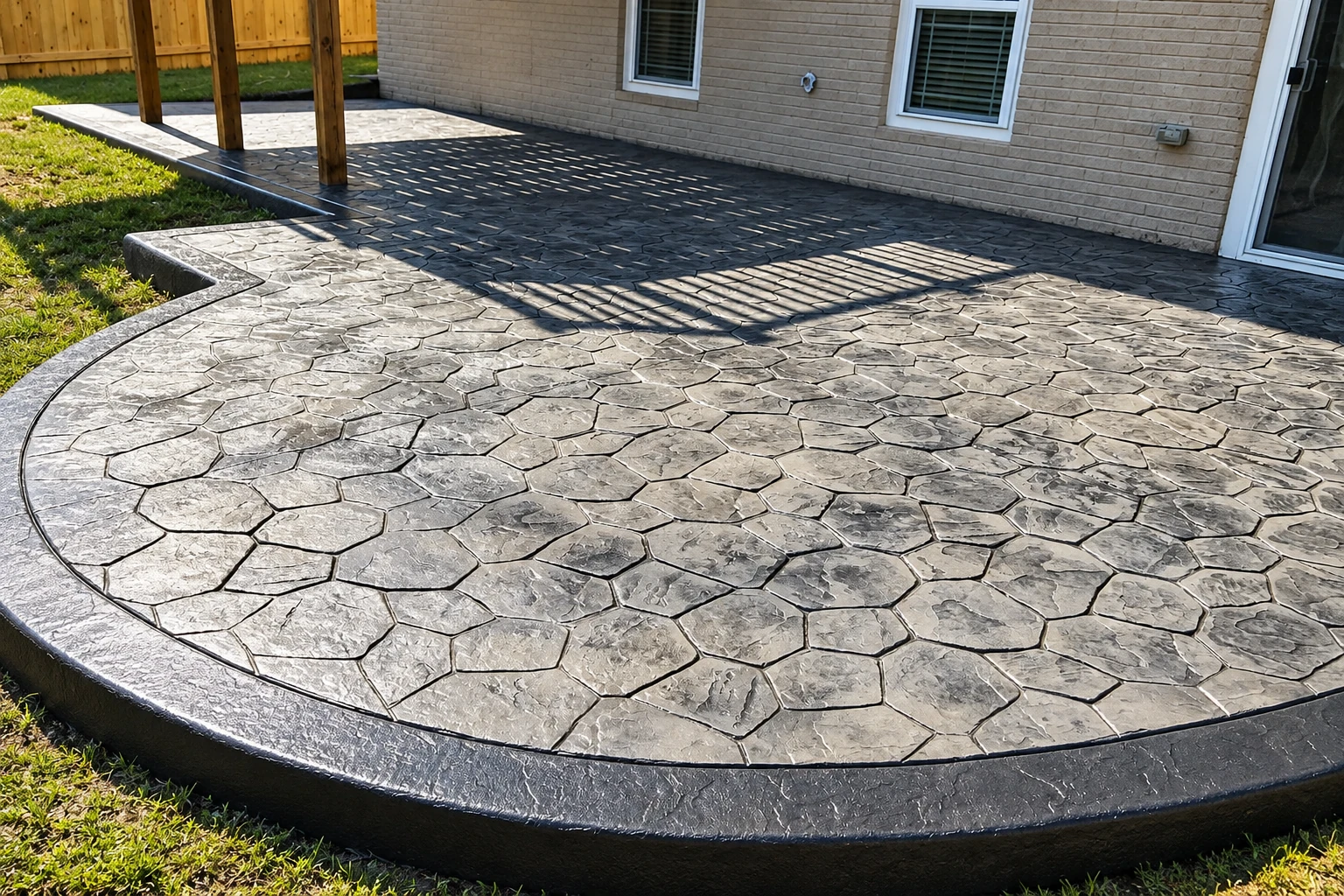
Decorative concrete in Seymour, IN, is ordinary concrete given color and texture. The color comes from acid stains, shake-on color powders, or color mixed into the concrete, and stamps, stencils and forms press in a pattern that looks like brick, cobblestone, tile or marble. It lets a patio, walk or driveway match your house, and it often comes with a new slab, a tear-out of the old one, or new steps.
Most people who call us have a patio or walk that's plain gray, or an older colored slab that's faded, blotchy or peeling, and they want to know what a better one involves. The price moves with the size of the area, how much digging and base work the ground needs, which color method you pick, and how detailed the pattern is, so a single color costs less than stamped concrete with several colors and hand-finished edges. The schedule mostly turns on the weather and on curing, which is the wait while the concrete gains strength before you use it or seal it. My written estimate spells out what's included, so you can see where your money goes before we start.
How do you know it's time for decorative concrete or a refresh?
Color gone dull and patchy
A stamped or colored slab that looks washed out, or soaks up water instead of beading it, has usually lost its sealer. Left alone, it stains more easily and keeps fading, which makes the cleanup and reseal a bigger job later.
Top layer flaking off
When color peels away in thin flakes or the surface pops off in spots, the top layer is letting go, often from a weak finish or salt on a young slab. Each round of freezing and thawing usually opens more of it, and it gets harder to patch so it matches.
Plain slab that's sinking
A gray patio next to a brick or stone house can look unfinished, and old patches and uneven spots make it worse. If the slab is sound and level, we can often add color, but if it's sunk or cracked through, it's usually smarter to replace it before you pay for color.
Often paired with decorative concrete
Concrete retaining walls
Raised beds, terraced yards and patios cut into a hillside need a wall that keeps soil and water from pushing on the new slab.
Concrete floor installation
A new basement, shop or addition floor can take stain or color too, so it's worth planning the finish before that concrete goes down.
How we pour and finish decorative concrete
I start by walking the area with you and checking where the water runs, because a slab that drains toward the house causes trouble no matter how good it looks. We dig out and pack the subgrade, the ground the slab sits on, set the forms and add rebar, the steel that holds a slab together, where the job calls for it. We'll help you choose between color worked into the surface and color mixed at the plant, and I'll tell you honestly that one even shade is harder to hold over a big area, so if you'd like to see the color first, we can pour a sample panel before the main job. We plan pours for the cooler part of the day when we can, since midday heat can leave a weak, dusty top. Then we stamp, stencil or texture the surface and cut control joints, shallow grooves that give the slab a straight place to crack instead of a random one. If the budget gets tight, I'd rather simplify the pattern than skimp on the base, because nobody sees the base on day one, and it's what keeps that color flat and whole a few winters later.
Decorative work often ties into other projects around the yard and the house. If your patio sits on a slope, a concrete retaining wall can give it a level spot, and we can color or texture the wall to go with the slab. Inside, the same stains and colors carry over to concrete floor installation for a sunroom or finished room where you want color underfoot.
Stamped or stenciled patterns
This suits patios and walks where you want the look of brick, stone or tile without separate pieces that shift or sprout weeds. It's the most hands-on finish, so it suits a project where the look matters most.
Stained color
Stain soaks into the top and leaves a mottled, natural-looking color rather than one flat shade. It suits someone who likes some variation, and it can go on a sound older slab as well as a new one.
Exposed aggregate
We place and smooth the concrete like any other job, then remove the top paste to show the stone in the mix underneath. It suits driveways and walks where you want a natural look with some grip underfoot.
Get a written estimate for your decorative concrete
Send the form and we'll reply within one business day to set up a free estimate at your property, with no obligation. If you'd rather talk it through, call (812) 271-8146.
Call (812) 271-8146Why Seymour homeowners call Seymour Concrete for decorative work
The owner writes your estimate
I come out to look at the job myself and write the estimate, and I've run this business in Seymour since 2017. You get your answers about color, pattern and sealer from the person who'll be there for the pour.
Finishers with me on site
Our crew of experienced finishers does the work, and I'm on site with them rather than checking in by phone. Color and pattern have to be worked while the concrete is still soft, so having me there keeps the job matching what we agreed on.
Licensed and insured on every job
We're fully licensed and insured. That protects you and your property while our crew is working there, and it's worth asking any contractor about before they start.
On decorative work, the color choice and the base under it decide how the slab looks a few winters from now, so tell us about your project and I'll come take a look.
What happens after you call about decorative concrete in Seymour?
Tell us about the job
When you call or send the form, I ask a few questions about the area, the look you want and how you'll use it. Then we set a time for me to come look at it with you.
Walk the site together
I walk the site with you, talk through color methods, patterns and sealers, and send a written estimate that says what's included. You'll see what's going into the base, the color work and the sealing before you decide anything.
Check permits, then schedule
Before we schedule, we check with the city or county office where your property sits and tell you plainly who will take care of any paperwork. Then we set a pour date, knowing the weather can push it.
Pour, finish and walk it
Once you say go, I'm on site with the crew from forming to finishing. We walk the finished job together before we leave, and I go over when it can be sealed and how to care for it.
Common questions
How much does decorative concrete cost in Seymour, IN?
Decorative concrete is priced by the job, once I've seen the area, the ground under it and the finish you want. A single stain color usually costs less than a stamped pattern with several colors, and a site that needs old concrete torn out or a lot of base work adds to the total. My written estimate breaks out the base, the color work and the sealer so you can see where to save without skimping on what's underneath.
Which wears better on decorative concrete, color hardener or integral color?
Color hardener, a color powder worked into the wet surface, gives a denser top that resists wear better, as long as it's put on well. It takes more time, effort and skill from the finishers, and hardener that's poorly applied can later delaminate, peeling away in flakes with weather and wear. Integral color is added at the ready-mix plant, which takes some control of the shade away from the crew, so it's harder to keep even on a big job, as I mentioned above.
What is the best sealer for decorative concrete that freezes and thaws?
There are two good choices, and each one is aimed at a different goal. Film-forming sealers, which leave a thin coat on top, are the most common pick for stamped concrete because they bring out the color, though putting one on too heavy or too soon can spoil the look. One sealer maker prefers penetrating sealers, which soak in rather than coat, for long-term durability where concrete freezes, thaws and gets deicing chemicals, so we'll talk through whether richer color or that protection matters more to you.
How long do you wait to seal new decorative concrete, and how often should it be resealed?
Guidance for outdoor concrete says to wait 28 days after the pour before sealing, unless a sealer was mixed into the concrete. After that, you reseal when the surface stops shedding water and stains or the color loses its depth, not on a set number of years. Sealing more often than that builds up a layer that's slow and expensive to strip off.
Can I use salt on new decorative concrete the first winter?
It's better not to. Ohio Concrete, a trade group in Ohio, advises sand or kitty litter for traction instead of deicing salt in the first year, especially on concrete poured after September, and it considers calcium chloride and rock salt fine on concrete over a year old when used as the maker directs. Air in the mix matters too, because tiny bubbles spread through the concrete, called entrained air, relieve the pressure that builds when water in it freezes, so ask any contractor whether your mix has it.
Can I see the color before you pour my decorative concrete?
Yes, by asking for a sample panel, a small test slab poured at your place with the same color and finish. One supplier's guidelines suggest judging it no sooner than 28 days after it's placed, because concrete color can vary with finishing and curing and can change over time. That's the panel I mentioned earlier, and it's worth the wait on a big job.
Start planning your decorative concrete
Have a rough size and a photo of the look you like ready, and we'll come out anywhere around Seymour, including Columbus, North Vernon, Scottsburg and Salem.